Mural Art: Miss Van
Storytelling: Oana Maroti
A meeting between two cultures that bring together a diversity of flowers, fruits, vegetables, fashion, and songbirds.
One of the two women is disguised as a man, wearing a beak mask and epaulets on a sal, a scarf derivation of the sari fashion. The woman masked as a bird seems to support her friend, as she appears so sad, that hair grows from her eyes and olive oil plants come out of her head. She transforms, slowly becoming nature, perhaps to make sure that there is a way out. Her blouse recalls the ancient goddess, but the accessories, the hairstyle, and the connection with nature update in the files of my imagery of the Eastern European fairies who put some epaulets on the blouses and are presented to the court.
Miss Van challenges the viewer by exposing the history of fashion and botany, with strong accents of gothic and surrealist aesthetics, and transports us to the mystery and terror novel history. It is a complex painting, which I have admired for years now. I have taken many photos, not very good ones, but with different lights, phones, and seasons.
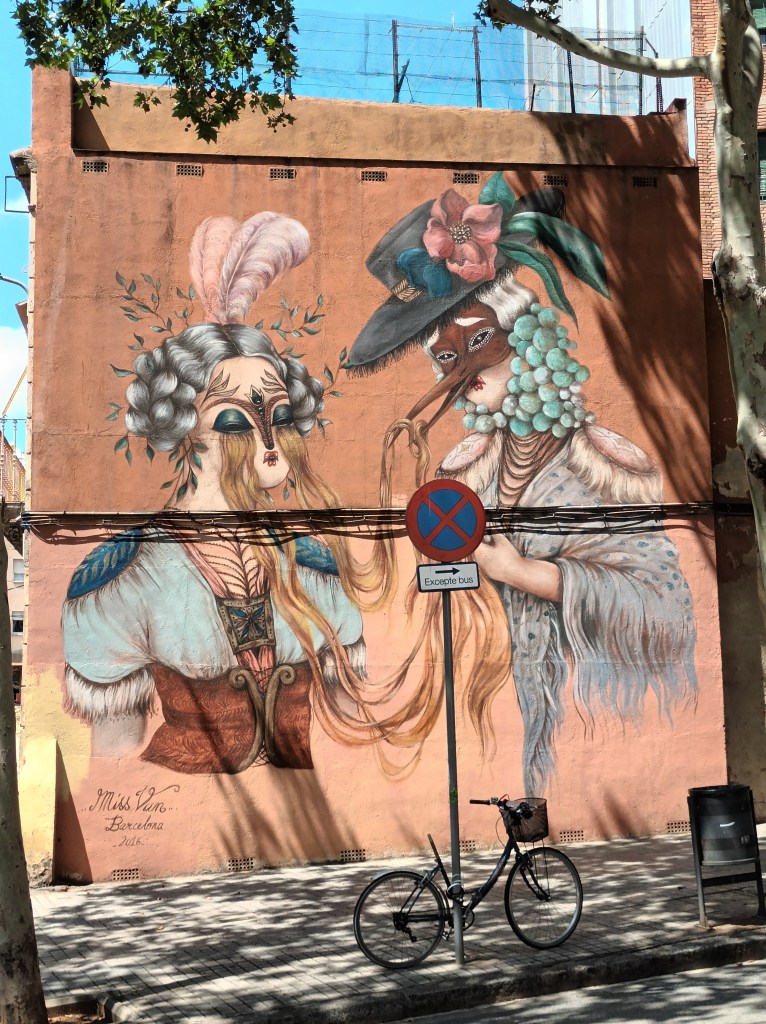
This mural was made in 2016, in Carrer Lepant, Barcelona for the FemGraff festival and it´s still there, intact, near the bus station, facing the metro station.
I was first attracted by the artist's decision to paint on a copper-colored wall, that is, the thermal insulation of the wall, which gives the buildings a rusty, abandoned appearance, but which also has a strong autumnal color, a seasonal color that I know as aramiu and that is seen in abundance in the deciduous forests (paduri de foi) that look to be on fire, during fall.
I used to walk by to admire this graffiti painting and exclaim: Phanthomas, The Phantom of the Opera, Poe, Molière, Mademoiselle Du Parc, The Marquise, The Mask, Lupin, Voltaire, Apollinaire and The Portrait of Fruits. A mural art that has numerous references to international literature and human rights fighters.
The cross-dressed woman and her bird mask recall the carnival, but what I see in the painting is an underground philosophy created to sustain those people who are consumed alive, those voices who are silenced, those tears who are forbidden.
Women in captivity are transforming as a defense mechanism and the underground shows that transformation.

Miss Van uses the exaggeration effect that defines comedy, but it is a comedy of grotesque proportions with an implicit socio-political critique regarding the inequality and danger that women felt and still feel. It is a direct reminder of the plays that were first used as an educational tool, of European dramaturgy that arrived in Asia and was illustrated.
The lips of the character are so similar to those of the character of the voracious Cat-Lady from "La vielle dame et les pigeons", a wonderful animation by Sylvain Chomet, that I had to come back to admire the painting to see what other secrets it had in store for me.
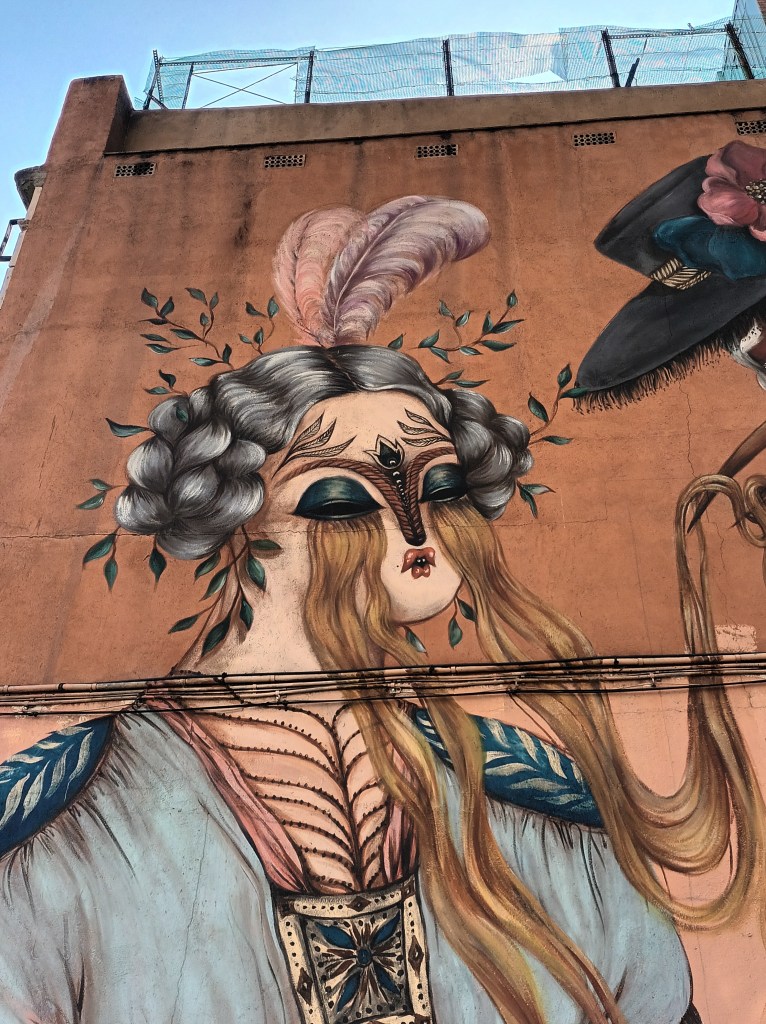
Whether married or courtesans, Miss Van’s ladies are tragic characters who yearn for freedom.
Their voluptuous and erotic presence marks an atypical beauty, the cute grotesque that is more often found in the Asian drawing style.
The cultural background of this painter is quite impressive, she takes the viewer on a journey from one adventure and suspense book to another, but it is also a manifesto of surrealism, a feminine version of surrealism, which continues the idea of Giuseppe Arcimboldo's plant portraits and points to a part of history that could have been forgotten.
Giuseppe Arcimboldo is the precursor of surrealism. He was a Milanese painter hired by the Habsburg court. He worked for the king in Vienna and also for his son in Prague. He is famous for the series of paintings of the Four Seasons and also for the portrait of Rudolf II, made of fruits and vegetables, named Vertumnus.
At the time of his presence at the empire´s court, the new continent was discovered, new plants, new food sources, and exotic vegetation arrived in Europe and the Habsburgs took charge of it. There was a scientific collaboration between the court of Prague and the court of Spain to plant potatoes, sunflowers, eggplants, avocados, different kinds of beans and pumpkins, sweet potatoes, peanuts, cashews, pineapples, papayas, guavas, yams, cassava, and many other things. Arcimboldo painted this botanical abundance in the form of portraits.
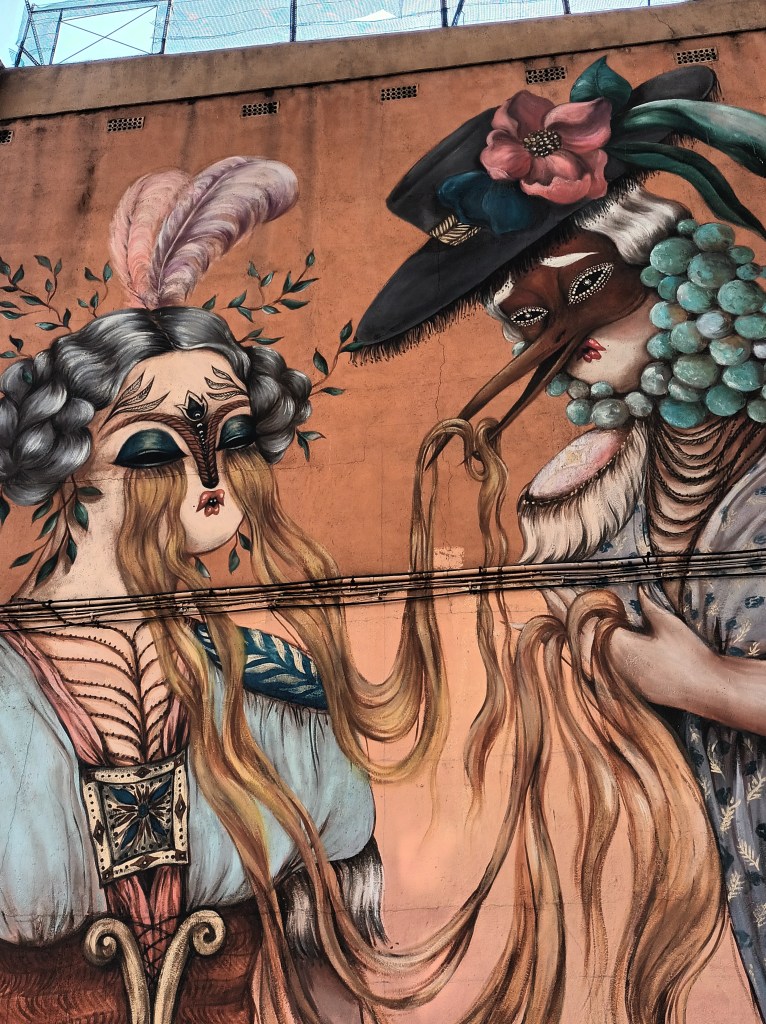
The lips of the king in Vertumnus were made of cherries, similar in shape to the lips of Mademoiselle Van´s character drawings. The painting disappeared at some point and was recovered by Christina of Sweden. The mystery surrounding Giuseppe Arcimboldo's portrait continues in Mademoiselle Van's paintings and marks a surreal aspect of this world that has such a history and is based on botanical diversity that we can surely ask ourselves: What´s with the meat in our menus?
Horta means vegetable garden and it is the name of a part of Barcelona that used to be cultivated, a place where mainly workers live, with neighborhoods that are not as cared for as the central or tourist urban areas.
If you want to visit Horta, know that the gardens are there, and one of them is the oldest in the city. El Parque del Laberinto de Horta was created as a mix of gardening, science, and financial possibilities intended for the people and opened to the public in 1791. This park is probably the first park to be opened to the public and one of the most significant intercultural elements of this city and probably of the whole country and even of the European continent.
Gardens are living gold because they can feed entire families and help the body in case of illness. Without botanical knowledge, medicine would not have evolved and this botanical knowledge was brought to the court table by women, the same women called witches could cultivate plants as food and medicine and some still do today.
The Phantom of Horta is a woman who represents all the women in the world who had a curiosity about chemistry or botany and who used natural sciences for our general interest. I am sure that many of these women are recorded as men and were probably cross-dressed since women were not well regarded if they were intelligent. Well, women were intelligent at that time too, and always found ways to provide for their children and their community. They made fabrics and clothes, food and medicine, and were superheroes that no one saw.
Today, the meat chain in farming and hunting can finally be observed as it is, disgusting and redundant. No matter who you are or where you come from, at some point your doctor will insist that you reduce or completely give up your meat consumption, it is just a matter of time.
Women all over the world have developed recipes based on what nature could provide, and it turns out that nature is also very intelligent and that longer lives are linked to the diet, the traveler's diet, maintained by women.
As entire populations were forced to leave their homes, migrant women have kept memories alive by using their botanical knowledge and ensuring that some culinary cultures still resist in the face of all the agricultural destruction.
Miss Van shows up the feminine erotism that is still banned in contemporary times as a powerful feature connected with the laws of nature, with the beauty of the pistil and botanical elements of time persistence.
Often, women in the various occupied territories are silenced. Like birds in a cage, these women wear feathers and beaks, wishing they could fly freely, searching for a sense of equality.
 Underground Art & Literature - open access to culture