Eco Metal Door Art: Quini Art
Storytelling for Ecology: Oana Maroti
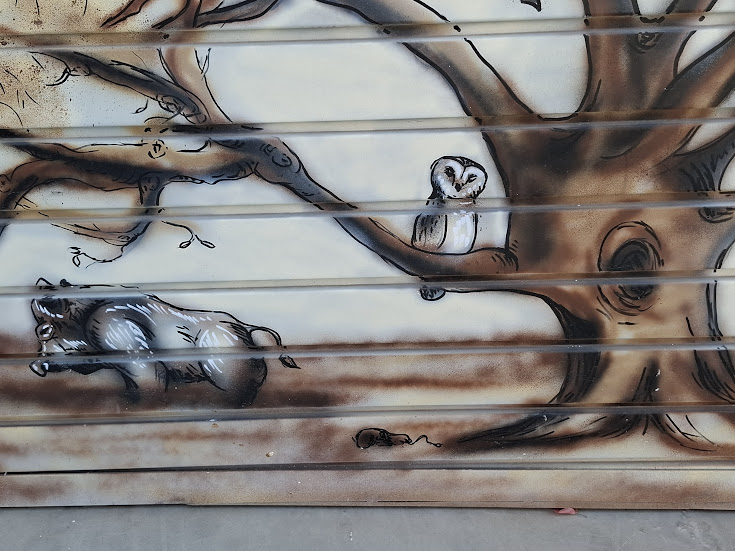
A tree hollow site it´s a magical thing for me as it takes me to all the stories and teachings with characters like children, and small animals, usually orphans that survived thanks to the parental presence of the tree.
In some cultures, from occupied territories, we are taught from the first years of life to search tree hollows, in case of imminent danger, and hide. For girls, it´s a special training due to the historical abuse.
For travelers, the tree's shade and its fruit are life-saving. Since antiquity, we have songs and a narrative of major appreciation for the tree (arbore). Under a tree, any person, even those without shoes, can find shelter, if it´s fructiferous, a fruit to make it easy to quench hunger and thirst, and the concert is for free, immersive sound of birds singing. It´s an interaction that stimulates the senses.
Romanians are so attached to the tree that they call it brother and it´s usually personifícate in stories, it can talk and gives the best advice. My grandfather, Danila One Eye, had taught me that the trees are taking care of us; we just have to be nice to nature. In a sign of reconnaissance, we will help out with possible pests, or go ahead and make a flute and proceed to sing under the tree, for its inhabitants. Sitting under a tree is seen as a comfortable, special moment of relaxation and feeling safe.
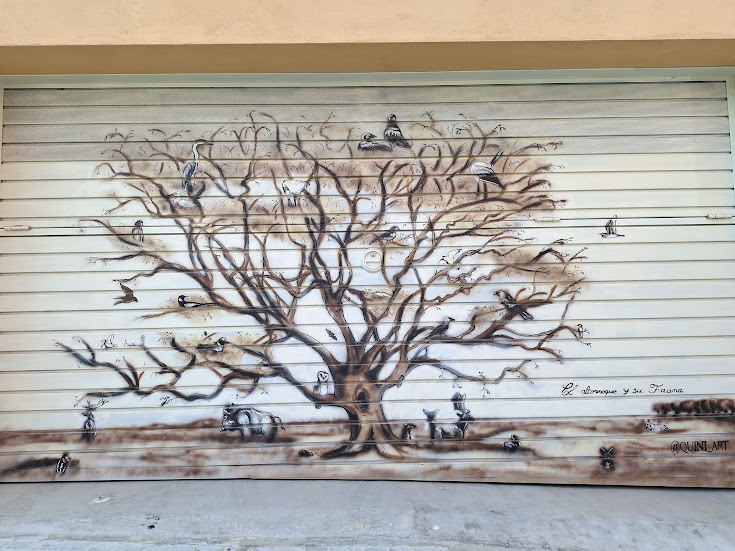
This is the Cork Oak, Quercus Suber, known as Alcornoque in Spain. This graffiti painting was made by Quini Art, it´s named El Alcornoque y su Fauna, and it's a pleasure to look at. I've admired this painting for years; it transports me to a world I discovered in books.
The Cork Oak is an ancient tree type, whose importance is colossal as it´s a symbol of natural fight against desertification and it´s the home and comfort-place of many animals, among them the Iberian Lynx and the Imperial Eagle.
Trees are becoming a luxury in the landscape. Urban projects are following a destructive architectural plan, massacring the trees. They are living creatures, secular many of them, so let´s call it what it is: tree massacre, and it affects all of us.
Fauna is heavily damaged as trees are their home, so the habitat disappears, endangering species, due to our preference for cement and cars that are overheating during summer. Life conditions in a place without the shade of trees are hard. People leave the city in desperation for areas with breathable air and natural shade.
As temperatures are rising and become problematic for health, any basic walk or waiting for the bus, or standing at the semaphore in full sun is life-threatening. We need trees, and during summer we suffer for not having them. We are connected to trees, and technology cannot compare with the natural ventilation that trees provide, plus they are key factors in biodiversity and soil quality.
A tree is already a super system, a giant from old times that we are taught in all native cultures, from each continent that we owe to protect. Now that the springs are reaching 30+ degrees, and suffocating summer temperatures are problematic is imperative to have a sustained discussion about the ecosystem and the necessity of trees´ presence.
Many cultures did not integrate the trees into the sacred narrative or even gave some trees negative connotations. Trees have been our friends and family since prehistoric times.
Please adjust the narrative and architecture around these gentle giants. Include the trees in the urbanistic plans and do not make the urbanistic plan by cutting them down. Tree conservation is not optional. For us, for the fauna, and for the planet, let´s normalize protecting the trees.
 Underground Art & Literature - open access to culture