Eco Storytelling by Oana Maroti
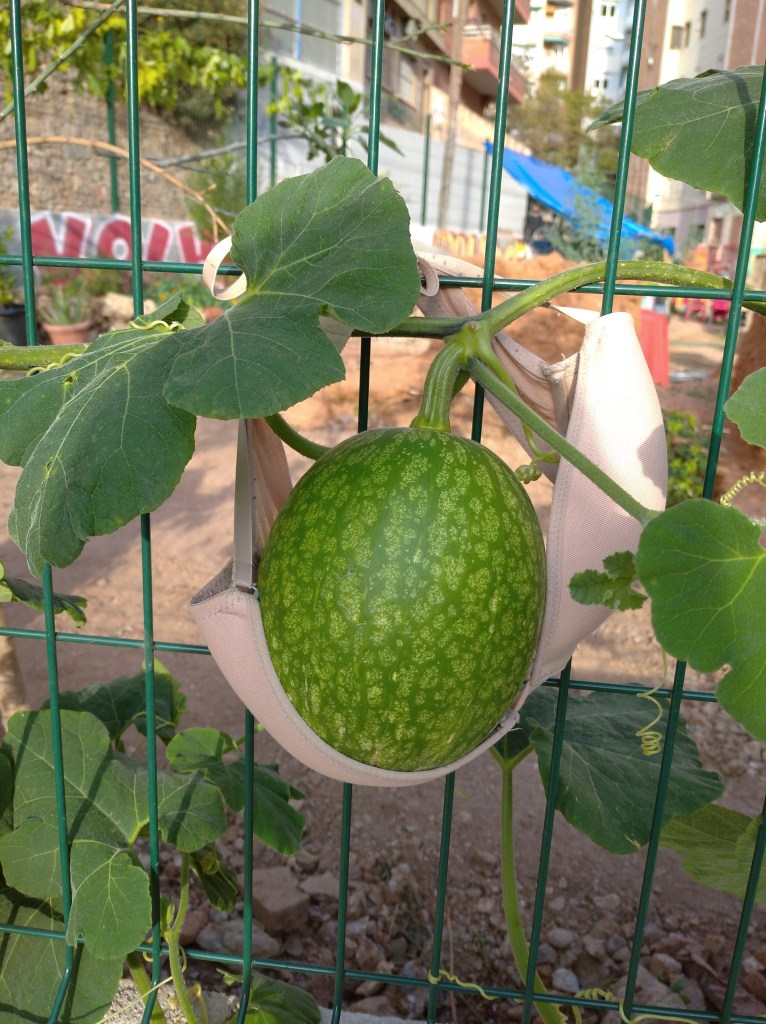
Upcycling at its best, using fashion items for gardening.
Probably growing fruit and vegetables in a greenhouse is more suitable for a good quality of life than actually wearing a bra. Anyhow, the fashion industry is making remarkable amounts of money with women's items, like the bra. If you are a woman out there who has to pay lots of money just for having a different body, with boobs included, you know what I mean.
I´m writing this in August, it´s hot, some days are canicular and the chance of seeing men's belly and breasts is huge, yet one is obliged to wear a bra, even if I can tell you, at the beach, men can show breasts bigger than most of the ladies out there. Not complaining, just observing things and nipples as they are.
Instead of shaming women for their bodies, which are constantly changing, let´s concentrate on ecology and how to reuse the textiles we already have, plus, polluting entire regions of the world, and one of them is in my native area, so this concerns me directly.
This beautifully rounded Cucurbitaceae exemplar was grown in a recycled bra, on metallic fences in a cement area, between buildings. With sunlight and care, and there´s plenty of sunlight in Spain, Cucurbitaceae species grow fast. This urban garden project was wonderful as it defied the cement, the architectural planning that is ingurgitating the green spaces.
Unfortunately, the parking lot people won over this ecological and social urban project. But let´s take a closer look at the benefits: the parking lot is just for some people who have cars, and nobody knows why these cars are in the city, in an easily accessible area, with all public transportation conditions possible, and even elevators and electric stairs to the hills, so the parking lot is in plus there.
On the other hand, this simple mini urban botanical project is inclusive, educational, environmentally friendly, and can also provide food for people. Let´s face it, for many of us, seeing people fed and cared for, rather than hungry on the streets, is therapeutic.
Barcelona is an intermediary place, an area of intersection of many cultures, migrants from all over the world and refugees. Having inclusive urban gardens unites this people, forms a community and reduces poverty and the imposed vulnerability effect.
More food, less conflicts!
 Underground Art & Literature - open access to culture