Storytelling for Accessibility by Oana Maroti
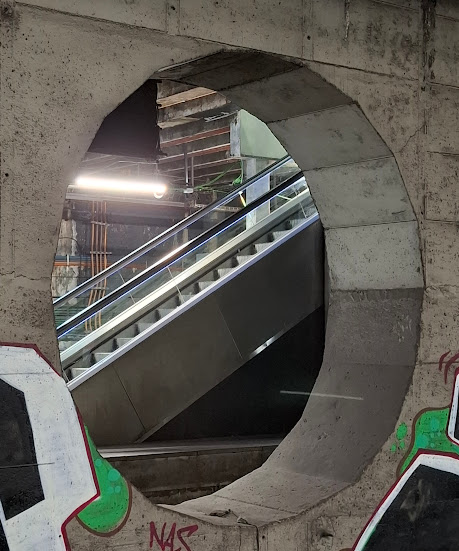
I use regular stairs when I can, but when I can't, escalators are a huge help.
Escalators can reach any hill, and in many areas, they save citizens returning from the market with their shopping. For those with reduced mobility or the 3rd age, escalators and elevators are a necessity, and accessible infrastructure projects are subsidized by the European Union.
Grandparents, people who require walking support, or who use wheelchairs, have no reason to be deprived of a comfortable life or to feel excluded. We share a common space, and it is extremely important for everyone that infrastructure adaptations are in place.
Being carried on the back, on the stairs, in danger of being dropped on the head at any time, because the space is not equipped with an elevator or escalators, is something totally absurd and dehumanizing.
It is also dehumanizing not to have access to your own home, to your apartment building, to parks and gardens, to institutions, cultural or sports spaces, monuments, tourist attractions… where there are only ordinary stairs and the space is still not adapted.
No matter how opulent, a city that does not ensure access for all its citizens remains an insufficiently developed city.
When the escalators stop or have a problem, people in hilly areas have great difficulty getting to the store, especially if they are elderly. Climbing a slope with a stroller and crutches is a matter of performance, or it is absurd to ask pensioners to perform. We have to protect them! That's the movie in the community.
Taking these people into account is simple and necessary because it is a simple projection of the future mobility and travel needs of all of us.
Where there are no escalators and elevators, I don't even know what you're doing… You can't be proud of the city if basic conditions are missing.
 Underground Art & Literature - open access to culture