Mural Art: arisa.art.studio
Street Art Curator: Oana Maroti
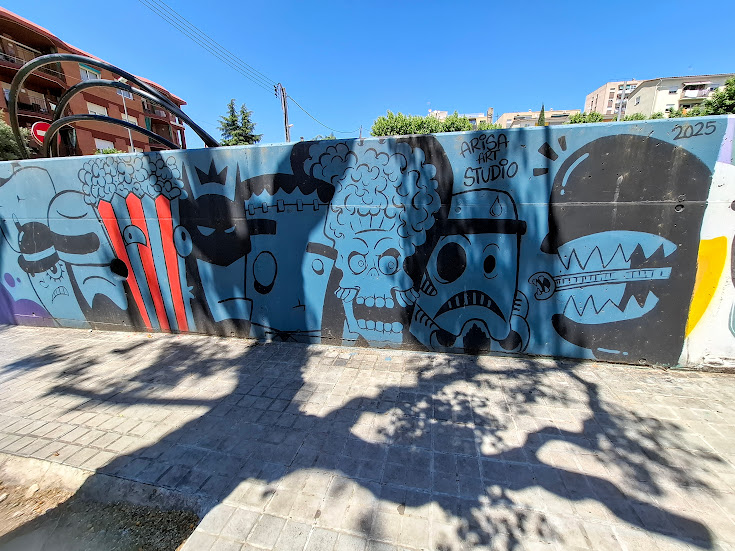
Movies are based on comics or short stories, even dreams, as in the case of Frankenstein. A film implies having a plot, and the villains' plot is an evolving narrative that usually includes a moral. Some creators approach the monster with empathy, intensifying the tragedy by showing the danger from the victim's perspective.
Villainous characters are important to us in childhood, and we can observe that they continue to be so in adulthood.
What we imagine in the early stages of our existence and the fantastic stories that moved us remain easy to recreate and provide comfort in later stages of life.
In the case of traumatic experiences and when society treats us as an alien, these stories remain important for our identity.
Since I've been watching many movies and concerts on my phone over the past few months, helping struggling immigrants reduce trauma, I can't pass up the opportunity to talk about how essential open access to culture is.
Why aren't there open-air cinemas in areas with a high concentration of immigrants and refugees? We have parking lots in cities, which only a few need, but a basic social strategy is lacking.
Why aren't creative methods facilitated for those who have stories to tell? When society marginalizes someone, a comic, a song, or a film can emerge as a natural creative reaction; it would be good to maintain their creative presence and publish it, presenting it alongside the author, the one who was once seen as a villain.

