From the Modern Man to the Contemporary Human, Essay fragment by Oana Maroti
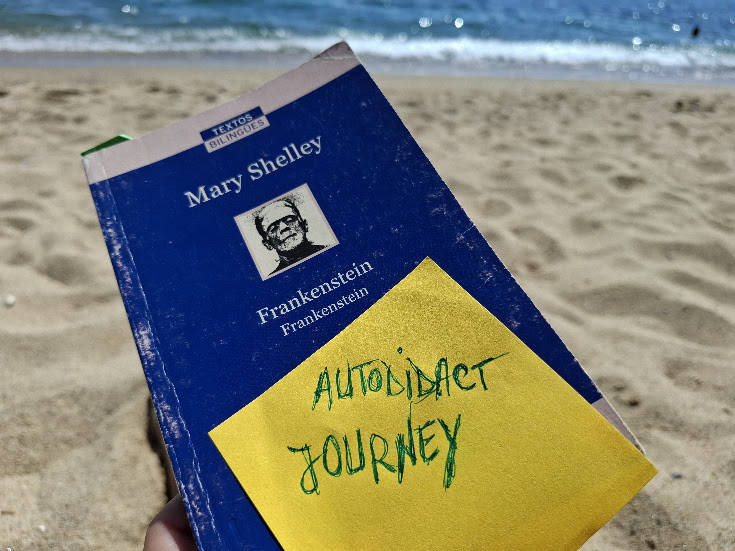
To better define the Contemporary Human, as there is an issue with it, let´s take a close-up on the well-known Gothic novel by Mary Shelley. The writer portrays the accepted and still applauded Modern Man, the Scientist, as full of knowledge to the level of creation, yet playing with life and not emotionally developed. Even if so ¨intelligent¨, Victor is incapable of accepting his creation and abandons his son, naming him ¨monster¨, "by" thus showing his incompatibility with being a father.
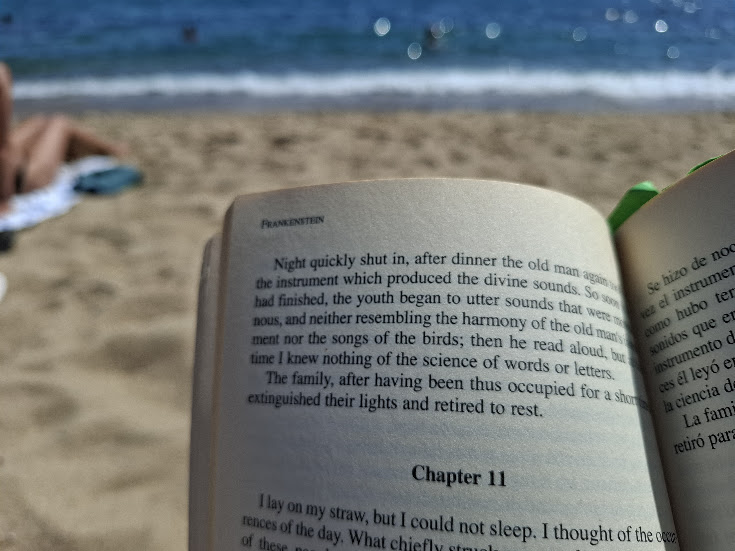
In the antithesis, Frankenstein is reborn as a monster, rejected for his looks, excluded, yet self-taught, and experiences empathy. He learns to speak by imitating a family he observes and learns to read and write.
More than a terror story, Mary Shelley creation is a development journey.
Frankenstein, as a character, is more of a metaphor for neurodiversity, a representative of the spectrum, like the Elephant Man in David Lynch's work. Curiosity makes knowledge possible, and Mary Shelley shows how personal development can be acquired.
Language acquisition in Frankenstein
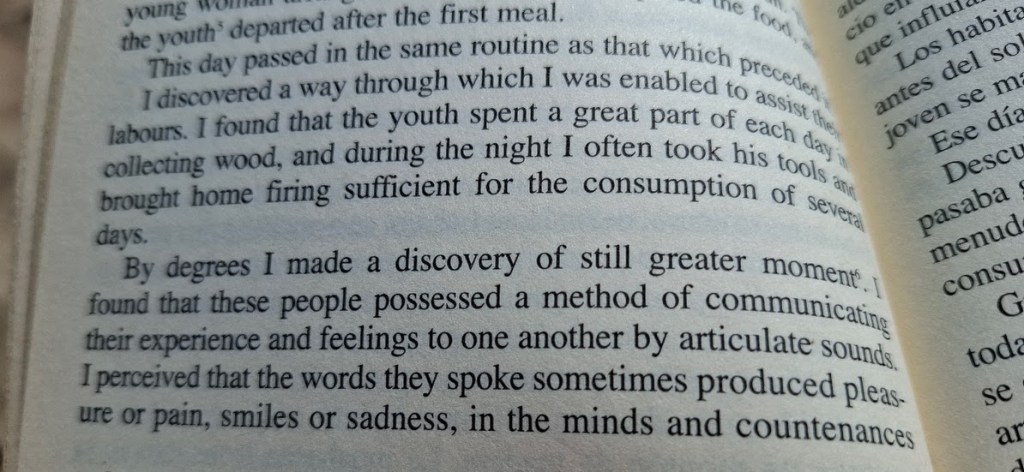
Whilst hiding, Frankenstein observes a family with the curiosity of a child and a scientist at the same time. This character was forced to be an adult from the very beginning and was never guided; therefore, this family is his teacher. Not only does he not harm the family, but at night he brings them wood for the fire to help them out.
Besides discovering fire, Frankenstein is very interested in the articulate sounds people produce, the difference in emotions the vocabulary brings, and learns with interest their way of communicating.
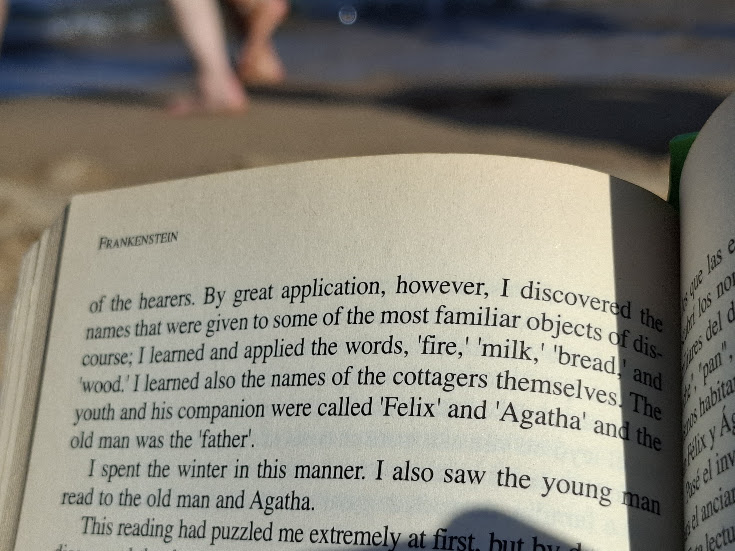
He spends winter learning words and understanding the concepts the family was using, but also learning about identity, names, culture, and family structure.
We are what we copy, and Mary Shelley´s creation copied the ways of a simple family, but a happy one, as music settles at night, from their cottage, in harmony with the birds.
By giving Frankenstein the chance to develop language, Mary Shelley transformed what science had inadvertently created and abandoned, demonstrating that communication is possible, even in the most incredible of situations. Mary Shelley is not only the first horror story writer but also one of the most emblematic fighters for human rights and inclusive education.
To exclude is easy; to include is the challenge! Mary Shelley made an intervention plan long ago, and a very clever demonstration of inclusive philosophy, in her character development. If we manage to see the reality and understand it, we realize that there is no monster, just us labeling.

