
Essay fragment for environmental protection by Oana Maroti
Beyond being the most eco-friendly way to travel, the train is also the most inclusive. It is well known that neurodivergent individuals may experience adverse reactions or discomfort when travelling by car—and even more so when flying.
Expanding rail connections would help decongest cities and prevent the decline of rural areas. If we combine this with remote work, we could have an excellent solution that benefits both our collective mental health and the environment.
For me, taking the train toward the mountains has always been synonymous with freedom; watching rural life unfold from the window is like viewing a great film. At some stations—those with industrial activity—the air can smell unpleasant (it reminds me of passing via Dej), but just a couple of stops later, the air becomes your ally once again. The views are incredible, local products are a true delight for the senses, and in autumn, travelling by train offers an unparalleled immersive experience.
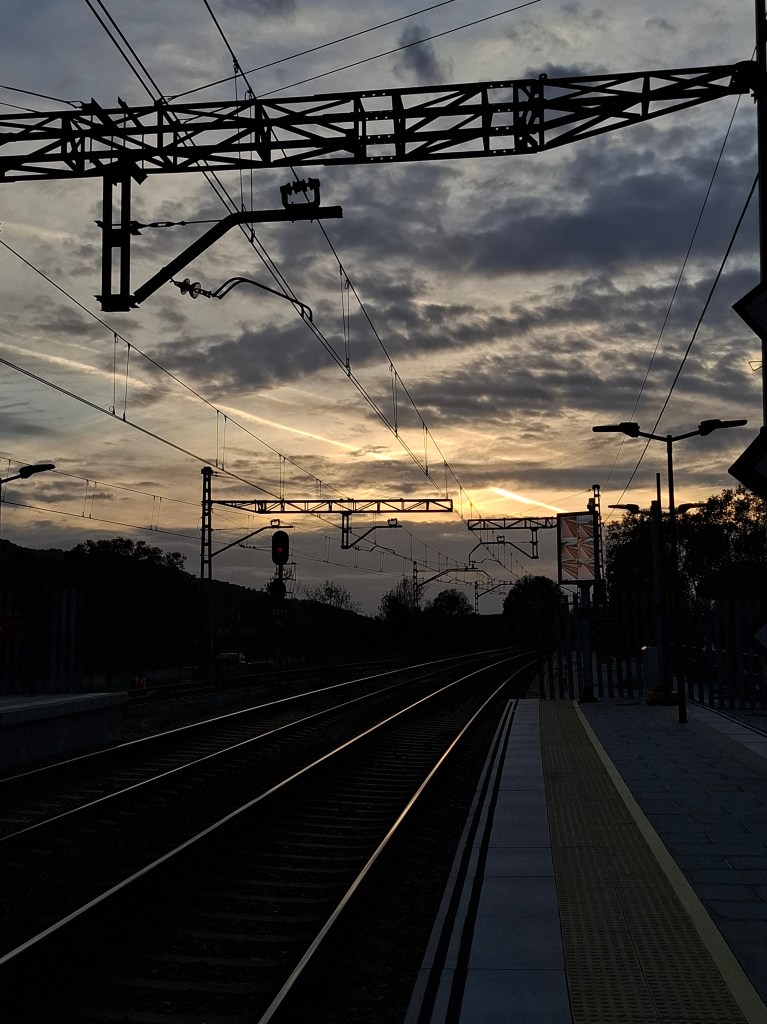
Yesterday, I hurried to the station to catch the sunset. The moon shone above the overhead wires; unlike the environment near highways—where the noise is painful for me, forcing me to wear headphones just to cope—the railway setting feels musical to the sensory processing system.
Stop conflicts, make travel inclusive!

